
More languages
More actions
m bold |
Minor copyedit for style |
||
| (4 intermediate revisions by 3 users not shown) | |||
| Line 6: | Line 6: | ||
'''Marxism''' is a scientific worldview and school of thought first developed by [[Marx|Karl Marx]] and [[Engels|Friedrich Engels]] in the mid 1800s. | '''Marxism''' is a scientific worldview and school of thought first developed by [[Marx|Karl Marx]] and [[Engels|Friedrich Engels]] in the mid 1800s. | ||
Marxism as a framework contains three components: '''the | Marxism as a framework contains three components: '''the philosophy''' (dialectical materialism), '''the economic theory''' (labour theory of value), and '''the political analysis''' (class struggle). Used together, Marxism becomes a very powerful tool with which to analyze the world and the [[contradictions]] inherently present in capitalism that inevitably create the foundations for [[socialism]] and then [[communism]]. | ||
Marx and Engels themselves did not invent socialism, as several theorists had already coined the term and used it. However, these thinkers lacked a grounded framework with which to advocate for socialism and bring it about in society, and became known as [[utopian socialism|utopian socialists]]. Marxism instead analyzes the world through its three components and, due to this methodic approach, became known as [[scientific socialism]]. | Marx and Engels themselves did not invent socialism, as several theorists had already coined the term and used it. However, these thinkers lacked a grounded framework with which to advocate for socialism and bring it about in society, and became known as [[utopian socialism|utopian socialists]]. Marxism instead analyzes the world through its three components and, due to this methodic approach, became known as [[scientific socialism]]. | ||
Since the 19th century, Marxism has | Since the 19th century, Marxism has developed into several different currents of thought, including [[Marxism-Leninism]], [[Maoism]] or [[Mao Zedong Thought]], [[Ho Chi Minh Thought]] and others. | ||
<small>[[Marxism|Read more]]</small>}} | <small>[[Marxism|Read more]]</small>}} | ||
{{Portal container|width=3|border=no|align=center | {{Portal container|width=3|border=no|align=center | ||
|content=== Getting started? == | |content=== Getting started? == | ||
Check out our 1-month reading list for absolute beginners! | Check out our 1-month reading list for absolute beginners! | ||
{{button|align=center|color=blue|width=100|link=:Category:Crit's absolute beginner reading list|text=Read now}}}} | {{button|align=center|color=blue|width=100|link=:Category:Crit's absolute beginner reading list|text=Read now}}}} | ||
{{Portal container|width=12|border=no | {{Portal container|width=12|border=no | ||
|content=== Concepts == | |content=== Concepts == | ||
| Line 65: | Line 63: | ||
<div class="library-container"> | <div class="library-container"> | ||
{{Library card mid|name=Karl Marx|image=Marx_colorised_thumb.jpeg|category=Library works by Karl Marx}} | {{Library card mid|name=Karl Marx|image=Marx_colorised_thumb.jpeg|category=Library works by Karl Marx}} | ||
{{Library card mid|name=Friedrich Engels|image=Engels colorised thumb.jpg|category=Library works by Friedrich Engels | {{Library card mid|name=Friedrich Engels|image=Engels colorised thumb.jpg|category=Library works by Friedrich Engels}} | ||
{{Library card mid|name=Vladimir Lenin|image=Lenin colorised thumb.jpg|category=Library works by Vladimir Lenin}} | {{Library card mid|name=Vladimir Lenin|image=Lenin colorised thumb.jpg|category=Library works by Vladimir Lenin}} | ||
{{Library card mid|name=Joseph Stalin|image=Iosif Stalin colorised thumb.png|category=Library works by Joseph Stalin}} | {{Library card mid|name=Joseph Stalin|image=Iosif Stalin colorised thumb.png|category=Library works by Joseph Stalin}} | ||
| Line 87: | Line 85: | ||
* [[Mao Zedong]] | * [[Mao Zedong]] | ||
* [[Vladimir Lenin]]}} | * [[Vladimir Lenin]]}} | ||
{{Portal container|width= | {{Portal container|width=6 | ||
|content===Parties== | |content===Parties== | ||
{{Communist parties}} }} | {{Communist parties}} }} | ||
{{Portal container|width= | {{Portal container|width=6 | ||
|content===Countries== | |content===Countries== | ||
Sorted by date of proclamation: | Sorted by date of proclamation: | ||
| Line 117: | Line 113: | ||
* {{flagicon|Flag_of_Laos.svg}} [[Lao People's Democratic Republic]] | * {{flagicon|Flag_of_Laos.svg}} [[Lao People's Democratic Republic]] | ||
* {{flagicon|Flag_of_Vietnam.svg}} [[Socialist Republic of Vietnam]]}} | * {{flagicon|Flag_of_Vietnam.svg}} [[Socialist Republic of Vietnam]]}} | ||
{{Portal container|width=12|border=yes | |||
|content=<dpl> | |||
title=Acronyms | |||
include=%1 | |||
</dpl> | |||
<references group="note"/>}} | |||
</div> | </div> | ||
[[Category:All portals]] | |||
Latest revision as of 02:44, 22 September 2025
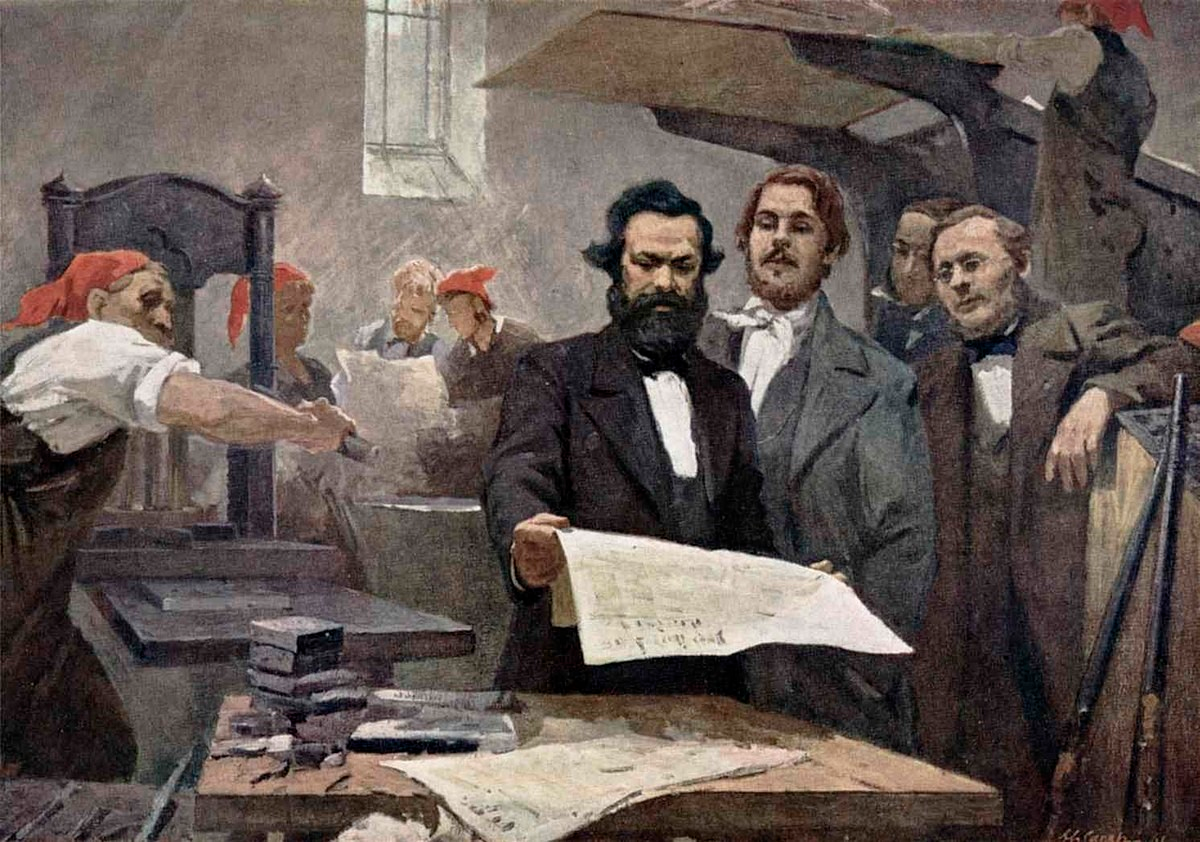
Introduction
Marxism is a scientific worldview and school of thought first developed by Karl Marx and Friedrich Engels in the mid 1800s.
Marxism as a framework contains three components: the philosophy (dialectical materialism), the economic theory (labour theory of value), and the political analysis (class struggle). Used together, Marxism becomes a very powerful tool with which to analyze the world and the contradictions inherently present in capitalism that inevitably create the foundations for socialism and then communism.
Marx and Engels themselves did not invent socialism, as several theorists had already coined the term and used it. However, these thinkers lacked a grounded framework with which to advocate for socialism and bring it about in society, and became known as utopian socialists. Marxism instead analyzes the world through its three components and, due to this methodic approach, became known as scientific socialism.
Since the 19th century, Marxism has developed into several different currents of thought, including Marxism-Leninism, Maoism or Mao Zedong Thought, Ho Chi Minh Thought and others.
Concepts
Lenin wrote the three sources and components of Marxism to be:
Economics
Philosophy
Start here:
Then follow up with:
- Dialectical materialism
- Materialism
- Historical materialism
- And its opposite, Idealism
- Materialism
- Dialectics
- And its opposite, metaphysics
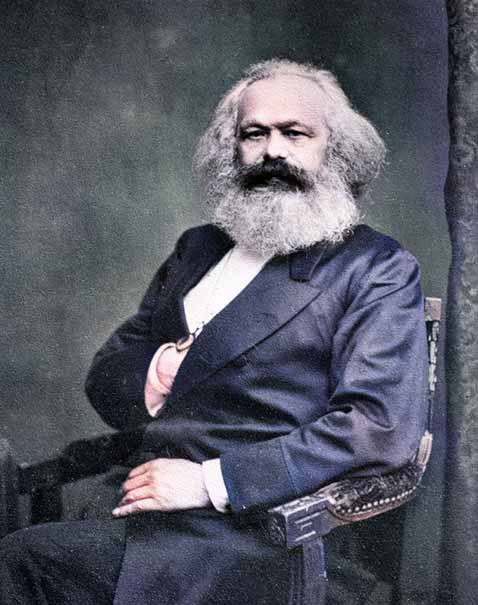
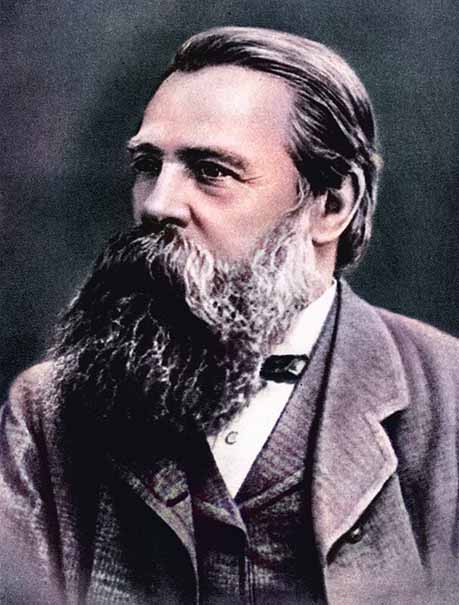
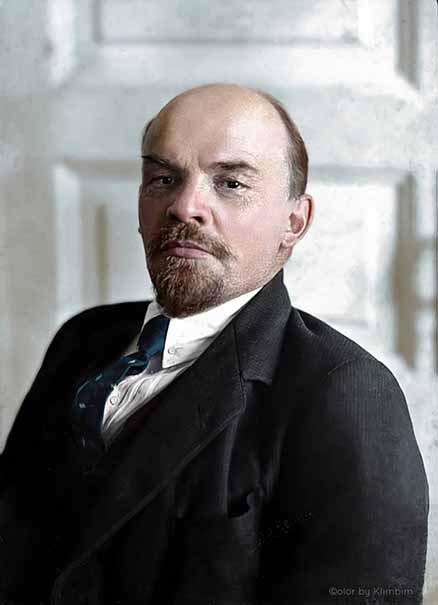
Library works
We recommend works from the most important theorists of communism:
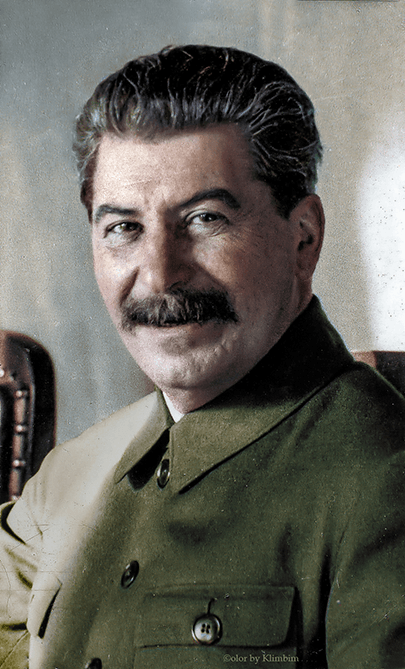
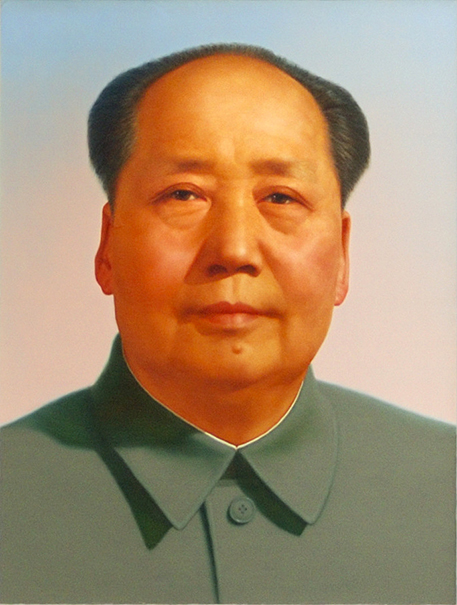
People

There have been many important people to Marxism. Below, in alphabetical order, are some of them:
Parties
| Part of a series on |
| Communist parties |
|---|
Countries
Sorted by date of proclamation:
Former Existing Socialism
 Union of Soviet Socialist Republics
 Mongolian People's Republic
 Socialist Federal Republic of Yugoslavia
 People's Socialist Republic of Albania
 People's Republic of Bulgaria
 Polish People's Republic
 Socialist Republic of Romania
 Czechoslovak Socialist Republic
 German Democratic Republic
 Hungarian People's Republic
 People's Democratic Republic of Yemen
 Republic of Angola
 People's Republic of Mozambique


Currently Existing Socialism


- ↑ The term "PatSoc" almost always refers to the "Patriotic Socialists" in the United States of America exclusively