
Essay:An Investigation on the Green Revolution Experience in India and China
More languages
More actions
Essays reflect solely their author's point of view. We ask only that they respect our Principles.← Back to all essays | Author's essays An Investigation on the Green Revolution Experience in India and China
by Johnnycommie
Published: 1/7/2026 (last update: 2026-01-07)
20-40 minutes
I.
The so-called “Green Revolution”—the mid-20th-century push for high-input, monocrop agriculture—is often hailed as a great success aside from the ecological effects. Not better written anywhere but by Briggs in the International Encyclopedia of Human Geography 2009 entry for The Green Revolution:
“The Green Revolution is the term given to the use of high-yielding varieties (HYVs) of wheat and rice particularly during the 1960s to increase food crop production, especially in India. The new seed varieties, popularly called ‘miracle’ seeds, were developed in Mexico (wheat) and the Philippines (rice), but it was the new dwarf varieties of wheat which provided the bigger growth in yields per hectare. Although the introduction of the HYVs resulted in large increases in total production, there were other consequences which were less positive. These included a loss of biodiversity, the lowering of the water table, increased salinization, an increased use of pesticides (leaving residuals in the environment), and increased rural inequalities. Despite the success of the Green Revolution in increasing yields per hectare in India, this success has largely bypassed Africa. The reasons for this include the fact that both wheat and rice are relatively unimportant staple crops in Africa; that Africa’s main staples of maize, sorghum, millet, and cassava have experienced only modest productivity gains; and that Africa’s infrastructure is not sufficiently well developed to support significant agricultural change” (Briggs 2009).[1]
The first section suggests that the central aspect of the Green Revolution, the implementation of HYVs in the Global South, was successful. It claims the goal was “to increase food crop production, especially in India,” and while technically true, this increased food production in India did not go to Indians; rather, it was used as part of an export-oriented industrialisation scheme with the US, leading to severe setbacks for India. Further, the synopsis ignores that HYVs were only more productive when paired with immense amounts of fertilisers (Stone 2023).[2] A single sentence is given to the socioecological disasters. It ends by declaring the failure of the Green Revolution not a result of the agroecological malguidance and agro-imperialism, but because it didn’t go far enough. The issue with the Green Revolution in the academic and cultural zeitgeist is that it wasn’t “inclusive” to the African continent. In reality, it is an argument for the universalisation of the Green Revolution, the reproduction of India’s fate in Africa, particularly the sub-Saharan region, which receives much attention.
The Green Revolution did not solve world hunger. Instead, it created cheap wheat for the benefit of American multinational corporations. The political-economic dimension of increased wheat growth was not considered for the benefit of reducing hunger: “Food availability has to be refracted through the element of price. There may be a mountain of food available, but access to food is only based on the entitlements that people have to be able to exchange for food. This is one of the reasons, among others, that explains the bitter irony that Indians have remained food insecure despite all this bumper wheat production” (Kumar 2016).[3] The majority of the world’s hungry simply cannot afford to buy food, though it is abundant. The core issue with the Green Revolution was the mis—or mal—identification of the primary inhibitor to increasing agricultural production in a sustainable direction. The three factors of production (resources, labor, and technology) were not affected harmoniously; production as a system requires the sustainable appropriation of natural resources, a socially harmonious organization of labor, and technology oriented towards meeting societies’ needs, to be wholeheartedly sustainable. A misstep in one aspect hinders the development of each other aspect and the whole. “In the US government’s 1949 White Paper on China, Washington attributed the Chinese Revolution to the country having too many people and too little land…Malthusianism would still dominate global approaches to development and social policy for a long time, and its immediate policy conclusion – that technological improvements in food production could solve the social/revolutionary problem – was the essence of the Green Revolution.” (Ling 2024).[4] The overemphasis on technological solutions, ignoring and at the expense of labor organization and resource appropriation, has led to unsustainable agricultural practices and continued worldwide inequalities between the Global South and North.
The intersection between anticolonial modernization and state-building with the Green Revolution will be observed through the divergent examples of the Republic of India and the People’s Republic of China as a case study in sustainable development.
II.
To understand global agriculture and food production as a system, it is necessary to trace the history of human production. For the purposes of this research, history can begin in the Middle 1st millennium, where tributary relations of production dominated the globe. According to Ougaard’s summary of Amin’s concept, “[t]he defining feature of the tributary mode is that a centralised political structure extracts economic surplus from an agrarian area” (Ougaard 2020).[5] Advanced tributary regimes such as the Chinese and Aztec Empires differed from European tributary systems, titled “feudalism” to specify away from advanced forms, in that the tributary state encompassed a multinational territory and was strongly centralized, leading to technological and social advances in the advanced states, through effective use of agricultural surplus to develop socially and economically (Amin 2011).[6] European feudalism was highly decentralized, only surpassing China in the 19th century in terms of “technological inventiveness and the social productivity of collective work” (Amin 2011).[6] The low level of territorial integration, social organization of labor, and political centralization was the groundwork for mercantilism and capitalist relations to take dominance and re-form the economy of Europe. Amin identifies the period “from 1000 to 1800” as the period marking the start of tributary states and Europe’s development into capitalism.
A singular paragraph from Amin sums up the necessary history:
The European (“Western”) form of historical capitalism that emerged in Atlantic and Central Europe, in its offspring in the United States, and later, in Japan, developed its own characteristics—notably a mode of accumulation based on the dispossession, first, of the peasants and then of the peoples in the peripheries, who were integrated as dependencies into its global system. This historical form is therefore inseparable from the centers/peripheries contradiction that it endlessly constructs, reproduces, and deepens” (Amin 2011).[6]
The centrality of the peasantry in his analysis is particularly notable. As the primary producers for most of human history, and for a large part of modernity, especially in the Global South, the peasantry is the first object of surplus extraction. Humanity, defined by the capability to produce, is intimately tied to agricultural production.
After the colonization of the American continent, the influx of cheap raw materials and foodstuffs into Europe facilitated the industrial revolution and the contingent consolidation of the capitalist mode of production. Fueling industry by feeding the depeasantized workers of the North, the American peasantry, now enslaved and paying “tribute” to colonial powers, were unable to retain and continue their developed tributary states, essentially “de-developing” into export-slave economies (Prashad 2007).[7] The Global South was overwhelmingly populated with peasants and is still home to many millions today.
The peasantry are those farmers who work or own their own land. There are multiple relations within and between the peasants; some peasants may lend owned land to others for work (a sort of sub-rentier relation), while others may form family or village cooperatives. Irrespective of sub-peasant status, the Indian professors of economics Utsa and Prabhat Patnaik consider the peasantry the key class for advancing Global South liberation during the era of imperialism. The reason is multifaceted:
1) The national democratic revolution against the colonial-backed tributary mode of production in the periphery requires the participation of the masses of the classes, principally the peasantry, and must be led by the workers to bring the democratic revolution to completion; it cannot be led by the peasantry, who are prone to ally with the dirigiste compradors and whose small proprietorship tendencies can hinder higher social organization of labor.
2) Referring to the situation during post-war decolonization: “[S]ince imperialism is an essential component of metropolitan capitalism, as long as metropolitan capitalism remained intact, imperialism was bound to attempt to reassert its hegemony, albeit in a changed setting.” The Patnaik’s explain that this is precisely what happened: “A refashioned imperialism arose that subverted the postcolonial dirigiste regimes everywhere and replaced them with neoliberal regimes. This refashioned imperialism broke the class alliance that had underlain the Third World’s struggle against colonialism by integrating the domestic big bourgeoisie into the corpus of international finance capital…” (Patnaik 2025).[8] The weakness of the dirigiste regimes, such as India, lay in the state being led by the country’s landlord and capitalist classes, instead of a broad national class alliance including the overwhelming majority peasant class against imperialism. This makes the peasants decisive.
The Green Revolution arises as a counter-response to the socialist-oriented solutions to the peasant problem directed at the Global South, acting on and against the peasantry (though occasionally alongside certain sections) and endorsed by the dirigiste governments; the Green Revolution was an early onslaught of this “refashioned imperialism.” It presented the complex multidimensional plight of the Southern peasantry as so simple as to be solved by the introduction of High-Yield Varieties of seeds, agrochemicals, and mechanized irrigation, planting, and harvesting. As João Pedro Stédile of the Landless Workers' Movement of Brazil puts it: “Amid the Cold War, the United States – through its government and capitalists – pushed the so-called Green Revolution worldwide. This name stemmed from the ideological need to counter the ‘red’ people’s revolutions that had occurred. Additionally, the US argued that adopting agrochemicals would lead to a revolution in agricultural productivity, ensuring food for all” (Stédile 2024).[9] Those who created the disease would sell the cure.
III.
The truth spun to justify the Green Revolution was the severe malnutrition experienced by a large portion of the Southern population. Indeed, a characteristic of the modern Tricontinent is poor food resources. However, this begins in earnest with colonialization. The famines of India before British colonization were caused by wars, natural phenomena like monsoons, and poor policy. These famines were less frequent and less disastrous than those that came after colonization. Colonization disintegrated Indian society: the textile industry was crushed, and incomes up and down the production chain suffered. Subsistence farming could not be a reasonable fallback for disenfranchised textile workers since the British and their lackeys requisitioned foodstuffs more brutally than the former tributary state. The colonial mentality, combining incompetence, disregard for life, and focus on extraction, was strong: During the Great Bengal Famine, “the EIC initially left the matter of disaster management to the goodwill of private individuals, while simultaneously ensuring increased amounts of land tax collection during and after the famine. And during the Deccan Famine, “the British saw the process of famine relief as a window to exploit labor – the already struggling masses had to earn the relief by working in large-scale construction (roads, among other public projects) in both rural and urban areas. In exchange, they were paid at best subsistence wages, also known as the famine wages” (Halder 2023).[10] And of course, the Bengal Famine of 1943. The colonial conditions made natural famines more hellish than ever before.
The story holds in China - famines occurred due to combinations of natural conditions and policy decisions before subjugation to Britain. However, the famine resulting from the First Opium War was unparalleled in all of Chinese history. Nevertheless, the Qing Dynasty, then suffering from recent British economic warfare, declared, “The authorities bearing in mind, as the first essential, that relief is to be placed equally within the reach of all, and that not a single person be left deprived of the means of subsistence” (Edgerton-Tarpley 2013).[11] Without direct rule in China, the results of British colonial policy would be seen not in quotes from British officials in India, but rather through the dynasty's increased inability to respond to natural disasters under the British boot.
With the disintegration of indigenous states and their replacement by direct or proxy colonial states, food management degraded. The creation of the global south through the split in societies developed under colonialism, and those benefiting from colonialism also split the world along social modes of production lines, with tributary forms dominating the global south in the service of the growth of the capitalist mode of production in the north. Food production in the North (as well as the former Soviet Union and some parts of South America) looks like large-scale industrial farms, overwhelmingly above 500 hectares large. Agriculture in these regions has become the domain of wage workers, not peasants, for a variety of reasons.
There is no reason countries of the Global South could never return to a food-secure position. Food security has been identified by several leading anti-imperialist and Global South organizations as a key component of sovereignty. La Via Campesina defines Food Sovereignty as “the right of peoples to healthy and culturally appropriate food produced through ecologically sound and sustainable methods, and their right to define their own food and agriculture systems” (Campesina n.d.).[12] The organization defines agroecology, a scientific-social movement centered on sustainable and just food systems, as the central pillar of the peasant movement and the solution for world food systems. The Peasant Way emerged from peasant movements seeking solutions to the world after the Green Revolution. Their well-defined strategies did not exist in the 50s and 60s when the green revolution began, nor would they likely have been implemented or considered. Instead, it would be valuable to understand how various Global South governments at the time encountered the green revolution amid their unique formations and challenges.
IV.
Global South anti-colonial movements beginning in the 1910s and throughout the twentieth century can be oversimplified into two models, though internal diversity certainly exists.
The Martinician psychiatrist and social scientist Frantz Fanon identified multiple stages in the consciousness of colonized peoples. The stages see the enemies of the people redefined as the scope of “the people” widens (Fanon, The Pitfalls of National Consciousness).[13] Each higher stage negates and incorporates some factors of the lower stages. A low stage is tribal, familial, or ethnic (“racial”) identity. These definitions of “the people” divide on essentialist bases and are relatively small groups compared to the total colonized peoples in colonial territories. The next highest is the national identity, which is often formed by common traits of the peoples within a certain colonial territory, and may incorporate aspects of ethnicism into multiethnic nationalisms. The enemies of the people in this stage are on a socio-cultural level. The next highest, and arguably the highest depending on the reading, is the social or revolutionary stage. This consciousness identifies that people identifying with the national identity are not necessarily always acting for national interests: it introduces the subjective into the mix. Fanon’s stages were used to show why some anti-colonial revolutions went further than others. If the aim was to establish ownership of European colonial enterprises by national elites and otherwise operate the same, the national consciousness would see its mission complete. The social aspect is really an economic aspect, which recognizes that the ownership of the economy by and for the whole people requires it to be placed in public hands by a state run by and for the masses.
Anti-colonial movements following ideology stemming from the national consciousness can be referred to as Global South nationalist movements and resulted in dirigiste nationalist governments characterized by leadership contested by nationalist and comprador bourgeoise, big land owners, pampering to the petty bourgeoisie and urban workers, and trickery to the peasantry. Anti-colonial movements following ideology stemming from the social/revolutionary consciousness can be referred to as Global South socialist movements and resulted in socialist governments characterized by leadership among the urban workers, peasants, and nationalist and petty bourgeoisie against the big land owners and comprador bourgeoisie. These are both oversimplifications, as various examples of each model featured slightly different emphases on certain classes. The main requirements, however, are that nationalist governments appeased the mass classes but were susceptible to comprador betrayals, while socialist governments were broad class alliances against the big landowners and the comprador bourgeoisie. India and China serve as good case studies of both anticolonial governance models as well as interactions between Global South countries and the Green Revolution.
The balance of class forces in the leadership of India at the time provided an interesting environment for the Green Revolution. India was a leader of the Non-Aligned Movement during the Cold War. After independence, the Indian state sought to industrialize and purchased cheap wheat from the US: “[The program] allowed countries to obtain cheap food without extracting huge surpluses from their agrarian sectors to facilitate the transition. The US benefited because it found a marketing outlet for its farmers who were over-producing these commodities and could not find enough markets globally” (Kumar 2016).[3] Importantly, this allowed Indian peasants not to be price-scissor squeezed and facilitated industrialization, which was perfect for the Indian class alliance. This all changed when the Indian state condemned the U.S. invasion of Viet Nam after the French defeat. The U.S. cancelled Indian participation in the industrialization program, creating conditions of malnutrition for urban workers who relied on these cheap food imports. The U.S. restarted this program under the condition that American corporations could set up private fertilizer plants in India and that India would purchase fertilizers from the U.S. The U.S. shifted from seeking good prices for its farmers by creating a captive market to creating a captive market for large-capital agribusiness firms. The Indian government distributed high-yield wheat seeds (the plant that fed urban centers and not the rural lands, which ate other cereals) with minimum support price protection to high caste and class farmers in water-rich districts, as high water and fertilizer inputs were required for these HYV seeds to work. The Indian government took the burden of buying ever-increasing amounts of fertilizer to distribute to farmers and subsidizing water and seed input prices, and eventually, in the neoliberal period, would individualize this burden and weaken minimum price support protections.
Over the next years, crop yields increased dramatically. Scholarship supporting the Green Revolution tends to emphasize these wheat seeds as the overwhelming factor. It ignores that “freedom from the shackles of punitive land revenue demands, demolition of the zamindari system, modest land reforms, and repeal of taxes on digging wells and making improvements to the land had given a new lease of life to farmers. The production of major crops (except wheat) increased as much in the 1950-1965 period (in 15 years) as it did between 1965 and 1990 (in 25 years)” (Kumar 2016).[3] The post-independence reforms that weakened caste without destroying it, keeping relations from the tributary era alive, certainly improved the productivity of the peasantry, though they could have gone further. Crucially, “India did not need PL480 imports to provide enough food for its people to begin with. They served only a small constituency, the urban labouring class, and that too, due to conscious policy choices made in the 1950s” (Kumar 2016).[3] India could have circumvented the reliance on the U.S. for primary production had the anti-colonial movement been led by social/revolutionary consciousness instead of national consciousness, or simply if the country had taken a Soviet price-scissor squeezing model on the peasantry. The latter would have ruptured the peasantry from the class alliance, though the contemporary assault on the peasantry by the far-right comprador BJP government is due to the slow break of the peasantry from the class alliance that resulted from the Green Revolution turn-of-events.
The dissolution of the dirigiste nationalist governments of the post-war era, beginning in the 70s and consolidating in the 90s, while still deepening today, gives way to neoliberal political economy. In this era, Global North institutions “have a mandate from capital to mitigate hunger, diffuse social unrest, and reduce the overall numbers of peasant producers worldwide—without introducing any substantive changes to the structure of the world’s food systems” (Holt-Giménez 2009).[14] The dirigiste policies insulated peasants from complete integration into international capital flows. Neoliberalism answered:
“The last half-century of capitalist agricultural expansion has pummeled the world’s peasantry, dispossessing them of land, water, and genetic resources through violent processes of enclosures, displacement, and outright piracy. The Green Revolution, the World Bank’s structural adjustment programs, and global and regional trade agreements have driven differentiation and de-peasantization. The same period has seen a fourfold increase in grain and oilseed production, with a steady decline in prices to farmers. This has been accompanied by a relentless industrial trend of vertical and horizontal concentration within the world’s food systems. Two companies, Archer Daniels Midland and Cargill, capture three-quarters of the world grain trade. The top three seed companies Monsanto, Dupont, and Syngenta control 39 percent of the world’s commercial seed market” (Holt-Giménez 2009).[14]
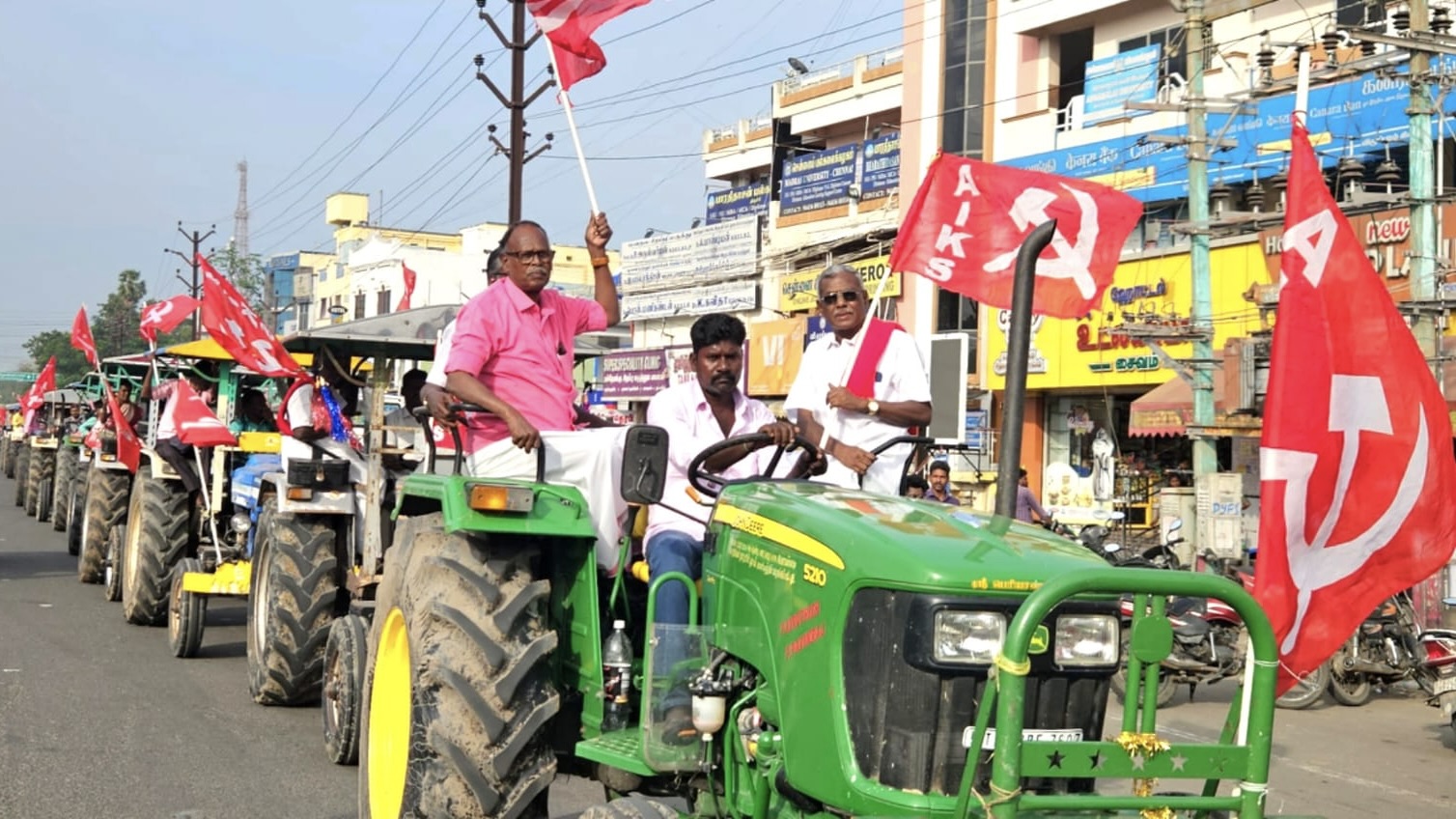
Indian peasants have seen the removal of minimum support prices, which guarantee a farmer that the government will purchase their product at a minimum price if they cannot secure a higher price on the market. According to Prabhat Patnaik, “corporate ascendancy over the agricultural sector, by making peasant agriculture subservient to the corporates, is a crucial part of the neo-liberal agenda farm laws were seeking to promote” (Patnaik 2021).[15] This corporate ascendency is the key to reproducing the colonial land control model: “This mechanism, of rigidly timing revenue demands on the peasants, getting traders to give them advances and thereby influencing cropping patterns, and then buying the crops with the same revenue that the peasants had paid, is no longer available to the metropolis. The protection offered to peasant agriculture by the post-independence dirigiste regime, which has taken the form of providing price support for foodgrains, has made the peasants ignore the dictates of the metropolis on the output-mix” (Patnaik 2021).[15] Thus, a set of “farm laws” would force peasants to contract directly with large agribusiness and remove government intervention. The Indian peasantry has been engaged in yearlong and occasionally bloody resistance against the farm laws and for the legal right to minimum support prices. The Indian peasants are fighting against the natural continuation of the logic of the Green Revolution.
V.
China is not dealing with the same agricultural problems as India. Instead, the problems of agriculture are the result of surpassing the problems India currently faces. China has a jump-start: At the refounding of the nation in 1949, the constitution fundamentally changed the legality of land use. Driven by a social/revolutionary consciousness, the movement explicitly identified the workers and peasants as the central classes, while the small and national bourgeoisie would be allied against the landowners and comprador bourgeoisie. The Chinese state provisioned in Article 10 of the Constitution that all urban land, as well as rural land not owned by collectives, is to be owned by the state. This gave China a definitively socialist character in political-economic terms. Land is not commodified: it cannot be bought and sold. It can only be leased. Land cannot be held privately, and thus, the foundation of economic activity cannot be held hostage by private interest. This removed big landowners as a class, while the Revolutionary War removed the comprador bourgeoisie from relevance. The nationalist bourgeoisie were granted limited business opportunities on the condition that they subordinate themselves politically to the other three revolutionary classes. There would be convergent facilitation between the three revolutionary classes, while the nationalist bourgeoisie would be excluded from the discussion and required to accept their decisions. The structure of this would change a few decades into Reform and Opening Up, as it was realized that the severe isolation of the nationalist bourgeoisie from the political process risked making them hostile to the structure and becoming comprador in mindset. Lacking relatedness with the rest of the people, many nationalist bourgeoisie would become selfish and break the ground rules governing private ownership. Read through Self-Determination theory, the changes to CPC policy at the turn of the millennium sought to secure the nationalist character of the bourgeoisie by ensuring their relatedness to the rest of the country, thereby taking advantage of their competency and generous business freedoms: If the state wanted to use the bourgeoisie’s potential for its own ends, it would need to allow them respect in society. This meant some political involvement for a society such as China’s.
Dynamic land reform had been carried out during the revolutionary war and consolidated in the early years of the People’s Republic. The severity of land reform on a micro scale was dependent on various factors: How enthusiastic the peasantry was about removing landlords, how poor the initial conditions were, how revolutionary the landlords were, et cetera. This land reform was the basis for the constitutional declaration of collective and state (“whole-people ownership”) monopoly over land and natural resources. With the complete destruction of tributary relationships (everywhere but Xinjiang and Tibet, as the terms of territorial integration set the autonomous regions’ social revolutions at a self-defined pace) the basis for agroecology is present. With legal protections from private agribusiness takeover, a large shield is cast over the peasantry. Industrial agriculture has indeed taken off in China, but it is inaccurate to say that this has been at the severe cost of the countryside. Depeasantization has occurred (though relatively controlled, preventing urban slums); however, this has both been slowing in the 2020s and has “improved conditions for rural petty production, making more land available” (Amin 2013).[16] It has also prompted the peasantry, which remains quite vibrant and on regular working terms with the national government as a whole, to seek new methods of revitalizing the countryside. It must also be noted that the Chinese conception of “Ecological Civilization,” which has broken from academia and sciences into national politics, has at its center the reduction and eventual dissolution of the urban/rural divide. The movement to revitalize the countryside is clearly necessary in this context.
An exploration of China’s interaction with the Green Revolution will be carried out before examining how history has allowed for an invigorated peasantry and national government towards sustainable development and food systems. The Chinese scholars Ding Ling and Xu Zhun emphasize how central the anticolonial movements in China and India were to the logic of the Green Revolution:
“To counter the revolutionary wave in Asia, the imperialists turned their focus to another major Asian country, India. Paul Hoffman, administrator of the US Marshall Plan and president of the Ford Foundation in the early days of the Cold War, once observed, ‘if in 1945 we had embarked [in India] on such a program [as the rural development program in Taiwan] and carried it on at a cost of not over two hundred million dollars a year, the end result would have been a China completely immunised against the appeal of the Communists. India, in my opinion, is today what China was in 1945’. Hoffman’s comments reflected the underlying motivation behind the Green Revolution, which, as is now widely recognised, was not truly ‘green’ or ecological but primarily aimed at distinguishing itself from the ‘Red Revolution’ (Ling 2024).[4]
These scholars point out that China, along with Viet Nam, had a unique experience with the Green Revolution because of their anticolonial models. As with land, fertiliser, seeds, agricultural machinery, as well as water resources, were held in common by rural communal governments. The benefits of scientific progress were treated as national property for everyone’s benefit. Since these technologies were developed at home, at a relatively autarkic level compared to India (this is not to be “pro-autarky” per se, rather India experienced international economic relations in a less than beneficial and collaborative manner), China did not owe any external power for these tools. The little external trade done for Green Revolution-era technology was from the Soviet Union: mostly food imports to fill in the gaps during rough times, or payments for machinery to get off the ground. The self-made Green Revolution is a source of national pride, which may be inhibiting contemporary strides towards ecological civilization. Ling and Zhun observed that hybrid high-yield seeds have wide support in China as of 2024, potentially a lingering remnant, while the rest of the Green Revolution-era methods are scrutinized. Though the Green Revolution carries a historic particularity in the Chinese context, this “does not change the basic fact that the Green Revolution itself was not ‘green’, but part of industrial civilisation” (Ling 2024).[4]
In the 50s and 60s, there was a great enthusiasm towards industrializing the country with a massive emphasis on sovereignty, at times so large that it pursued autarkic principles and shunned potential allies in the process. The Green Revolution technology was absolutely required to increase the productivity of the land to fuel the whole process. With the gains of the agricultural and industrial expansion being planned and collectively operated for long-term goals, China was able to reap immense benefits from the usage of Green Revolution technology: once the technology was firmly established and the whole system was concretized, China was able to end thousands of years of history of periodic weather-related famines. The basis for an industrial society was formed. Without the basis for an industrial society and the development of one, the path to an ecological civilization would not be open. To have an ecological society without the technology gained from an industrial society is to have an agrarian, low-quality-of-living society. Progressing through an industrial civilization has brought new technology, which is being used to rectify the situation of industrial civilization itself. Technological advancement from industrial civilization and agroecological knowledge from agrarian civilization are required to form a modern ecological civilization. The retention of a healthy peasantry is necessary throughout the industrial phase to keep agroecological knowledge alive and usable for the transition into ecological civilization. In their understanding, if China can construct a modern ecological civilization, their findings and technology can be routed to countries that are before or in the early stages of industrial civilization, and allow them to bypass the industrial stage, for they will not need the independent development of technology, nor need to learn what broadly works and what doesn’t. What must be understood from their own experience is to foster a collaborative and sovereign technology-sharing environment to prevent allies from retreating to autarky. China is now installing solar and wind power facilities through joint ventures and as installation services in Global South and socialist countries, while a majority of the world’s countries, including many Eastern EU countries, have signed on to the Belt and Road Initiative and the New Silk Road. China would not be where it is today unless the technology of the Green Revolution had been introduced on the particular economic base it was.
VI
Sustainable development is development whose results provide the capacity to rectify and recover from the development’s poor but necessary side effects. It is the furtherance that allows more furtherance. Furtherance may never occur if the conditions to continue are not reproduced.
Sustainability is a condition of a system, not a point that can be reached. A sustainable system can become unsustainable. India is experiencing disproportionate growth between living standards and private capital concentration, while China is experiencing disproportionate growth between living standards and private capital concentration, with a quickly increasing and high poverty floor, with large proportions of the economy controlled collectively. Both the sustainability of the environment and the economy, in conjunction and in “isolation,” in China are stark to both Indians and Americans. The U.S. is facing the largest financial bubble in history, created by private data infrastructure companies funneling money to each other through data center projects. It is the death throes of a highly unsustainable economic model that destroys the very base of human economic activity: the Earth and its people. The peasantry is all but wiped out in the United States. Rural farmers who still exist are pushed into subcontractor status to agribusinesses, while their children are forced to flee their homes due to immense infrastructure and opportunity gaps. The experiences of China and India provide an opportunity for regions unaffected by Green Revolution-style monopoly infiltration to not repeat mistakes and succumb to maldevelopment.
References
- ↑ J. Briggs (2009). International Encyclopedia of Human Geography: 'Green Revolution.'. Elsevier Science.
- ↑ Glenn D. Stone (2023). "New research further debunks legend of the Green Revolution." African Arguments.
- ↑ 3.0 3.1 3.2 3.3 Richa Kumar (2016-10-31). "Putting Wheat in Its Place, Or Why the Green Revolution Wasn't Quite What It's Made Out to Be" The Wire.
- ↑ 4.0 4.1 4.2 Ding Ling and Xu Zhun (2024). Why Chinese Agriculture Must Undergo an Ecological Transformation. Tricontinental: Institute for Social Research.
- ↑ Morten Ougaard (2020). Tricontinental: Institute for Social Research, vol. 47 no. 163. Review of African Political Economy.
- ↑ 6.0 6.1 6.2 Samir Amin (2011). The Trajectory of Historical Capitalism and Marxism's Tricontinental Vocation, vol. 63 no. 9. Monthly Review.
- ↑ Vijay Prashad (2007). The Darker Nations: A People's History of the Third World: 'Buenos Aires' (pp. 62-74). New Press.
- ↑ Prabhat and Utsa Patnaik (2025). The Worker-Peasant Alliance in the Transition to Socialism Today. Monthly Review.
- ↑ João P. Stédile (2024). Ecological Transformation, Agriculture, and the Survival of Humanity. Tricontinental: Institute for Social Research.
- ↑ Tamoghna Halder (2023-02-20). "Colonialism and the Indian Famines: A response to Tirthankar Roy" Developing Economics.
- ↑ Kathryn Edgerton-Tarpley (2013). Tough Choices: Grappling with Famine in Qing China, the British Empire, and Beyond, vol. 24 no. 1. Journal of World History.
- ↑ La Via Campesina (n.d.). "What is Food Sovereignty?" La Via Campesina.
- ↑ Frantz Fanon (2004). The Wretched of the Earth: 'The Pitfalls of National Consciousness'. Grove Press.
- ↑ 14.0 14.1 Eric Holt-Giménez (2009). From Food Crisis to Food Sovereignty: The Challenge of Social Movements. Monthly Review.
- ↑ 15.0 15.1 Prabhat Patnaik. "The Kisan Movement’s Direct Action: A defeat not only to Modi, but imperialism" Newsclick.
- ↑ Samir Amin (2013). China 2013, vol. 64 no. 10. Monthly Review.